 Trusted Service
 30 Day Return Policy
 2 Year Warranty
 Worldwide Delivery
Otters are one of Britain's great conservation comebacks, and still one of its most elusive mammals. After a sharp decline in the 20th century linked to water pollution, otters held on in the cleanest rivers and coasts of the north and west, and have been recovering across the UK since the 1980s as waterways have been cleaned up and the species gained legal protection. Scotland is now a European stronghold for the species, with an estimated 8,000 otters, but they remain secretive animals, and most people only ever see the signs they leave behind.
Scientific classification
The Eurasian otter, also known as the European otter, common otter or Eurasian river otter, Lutra lutra, is a semi-aquatic mammal in the mustelid family, alongside badgers, pine martens, stoats and weasels. It's the only otter species native to the UK, and is found right across Europe and Asia.

Otters around the world
There are more than a dozen otter species worldwide, from the Asian small-clawed otter to the giant otter of South America and the sea otter of the North Pacific. The Eurasian otter is the only one found in the UK.
The sea otter (Enhydra lutris) is the most aquatic of them, spending most of its life in the ocean off the Pacific coast of North America, where it's known for floating on its back and using rocks to crack open shellfish. Like the Eurasian otter, it has no blubber and relies on its fur to stay warm. The North American river otter, by contrast, lives in rivers, lakes and along coasts across North America.
Some otter species live in groups, and a group of otters is called a romp, or a raft when they're floating together in the water. British otters are mostly solitary, though, so you're far more likely to see a mother with her cubs than a crowd.
Physical characteristics
Otters have a long, slender body, a long thick tail, webbed feet, and a broad head with small ears. Their fur is brown, paler on the underside, and they swim low in the water with just the head and part of the back showing. Adults reach around 1.2 to 1.3 metres from nose to tail tip and weigh up to about 9kg.
Unlike seals, whales and other aquatic mammals, otters have no layer of blubber. Instead they rely entirely on their fur, which has two layers: a dense, soft underfur that traps a layer of air against the skin, and longer guard hairs on top that keep the water out. That trapped air does the insulating, which is why otters spend so much time grooming.
Habitat
Otters live on rivers, lochs, lakes, wetlands, estuaries and coasts. They're found most commonly along Scotland's western coast and islands, where a high proportion of the population lives by the sea.
Coastal otters are exactly the same species as their inland cousins. In Scotland they're sometimes called "sea otters", but they're not related to the true sea otter of the North Pacific. For shelter, otters use holts, underground or fully enclosed structures that range from natural cavities among tree roots to gaps in man-made structures like sea defences and bridges, and couches, which are above-ground resting places.
Behaviour and activity
Otters are solitary and secretive, and when they're active depends on where they live. River and loch otters are mainly nocturnal, most active around dusk and dawn. Coastal otters, which feed almost entirely in the sea, are mainly active during the day. That's one of the reasons you're more likely to spot one in daylight on Scotland's west coast than on an English river.
Home ranges differ too. Coastal otters can get by with around 4 to 5km of coastline because prey is so abundant, while river otters range much further, with around 20km of river for females and 32km for males.
Otters rely on scent marking to defend their territory and keep in touch with one another, leaving droppings called spraints in prominent places.
Life on the coast
Living in salt water brings a particular problem. Salt crystals left behind as seawater dries on the fur can interfere with the natural oils that help the fur repel water and hold air. That's why coastal otters need regular access to fresh water to rinse their fur clean, and why they're often found where streams meet the shore. Without that insulation, an otter can quickly get cold.
Diet
River otters feed mainly on fish such as trout, salmon and eels, and will also take frogs and toads, and occasionally small mammals and birds. Coastal otters feed almost exclusively in the sea, taking fish and crustaceans such as crabs. An otter needs to eat around 1 to 1.5kg of prey every day.
Breeding and cubs
Otters in Britain can breed in any month of the year. After around nine weeks of pregnancy, a female gives birth to two or three cubs in a holt, and raises them without any help from the male. The cubs' eyes open at around four to five weeks, and the mother takes them out of the holt for the first time at around ten weeks.
A waterproof adult coat develops at around two to three months, which is when the mother teaches her cubs to swim. They're often reluctant at first. The cubs stay with her for around a year while they learn to hunt, then move off to find territories of their own. Wild otters can live for up to around 10 years.
Conservation and legal protection

Otters are recovering well across the UK, but they still face pressures. Globally, the Eurasian otter is classed as Near Threatened on the IUCN Red List, and in the UK it's a priority species for conservation. In Scotland, road traffic is the single biggest source of otter deaths apart from natural causes, which is a good reason to slow down on roads near water at dusk and dawn.
The otter is a European protected species, with the highest level of legal protection available. In Scotland, it's protected under the Conservation (Natural Habitats, &c.) Regulations 1994 (as amended), and the equivalent protection in England and Wales comes from the Conservation of Habitats and Species Regulations 2017. The Wildlife and Countryside Act 1981 gives otters further protection across the UK. It's an offence to deliberately or recklessly capture, injure, kill or harass an otter, or to disturb one in a holt or other place of shelter. Otter shelters are protected whether or not an otter is in them at the time.
Some wildlife filming and survey work needs a licence too. In Scotland, NatureScot says you may need one to fit camera traps near holts, or to photograph otters at or near a holt or while they're rearing young.
Signs of otters
Otters are far easier to find evidence of than to see. Look for:
- Spraints: droppings left on prominent rocks, bridges, tussocks and stream junctions, often containing visible fish bones and, surprisingly, a smell many people compare to jasmine tea
- Holts and couches: places of shelter among tree roots, rock piles and structures near water
- Slides: smooth tracks worn down banks where otters slide in and out of the water
- Footprints: five-toed prints, around 6 to 7cm long, in soft mud or sand along the water's edge
How to see otters
On Scotland's west coast and islands, a patient watch along a rocky, seaweed-covered shoreline in daylight is often enough, using binoculars from a distance and staying quiet. Elsewhere in the UK, dawn and dusk on a quiet river or loch give you the best odds. Keep well away from holts and never approach cubs.
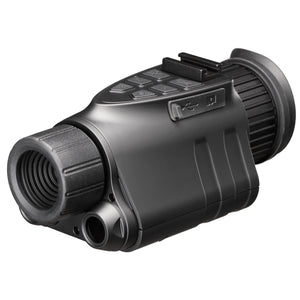
After dark, a night vision device such as the Nightfox Whisker lets you keep watching without any visible light, and thermal imaging, as used in our own footage, picks out warm animals against cold water. If you want the story of what an otter family gets up to after dark, our piece on otter behaviour covers what we filmed on the Isle of Mull.
FAQs
Are otters nocturnal? It depends on where they live. River and loch otters are mainly nocturnal and most active at dusk and dawn, while coastal otters in Scotland are mainly active during the day.
How many otters are there in Scotland? NatureScot estimates around 8,000 otters in Scotland, with an unusually high proportion, perhaps half or more, living on the coast.
Are Scottish sea otters a different species? No. Coastal otters in Scotland are the same species as river otters, Lutra lutra. They're sometimes called sea otters, but they're not related to the true sea otter of the North Pacific.
What is a group of otters called? A group of otters is called a romp, or a raft when they're floating together in the water. British otters are mostly solitary, so you're more likely to see a mother with her cubs.
What do otters eat? River otters eat mainly fish such as trout, salmon and eels, plus frogs and the occasional small mammal or bird. Coastal otters feed almost entirely in the sea on fish and crustaceans like crabs, and an otter needs around 1 to 1.5kg of food a day.
Are otters endangered? Globally, the Eurasian otter is classed as Near Threatened on the IUCN Red List. In the UK, otters have recovered strongly since the 1980s, though they remain a priority species for conservation.
What's the difference between an otter and a mink? Otters are much larger and more powerful, with paler grey-brown fur, a broader snout, and a broad, pale chest and throat.
What's the difference between a sea otter and a Eurasian otter? The sea otter lives along the Pacific coast of North America and spends most of its life in the ocean, while the Eurasian otter, the only otter native to the UK, lives in rivers, lochs and along coasts, and comes ashore to rest. Scottish coastal otters are Eurasian otters, not sea otters.
Are otters protected in the UK? Yes. The otter is a European protected species, and it's an offence to deliberately or recklessly harm or harass an otter, or to disturb one in its holt. Holts and other shelters are protected whether or not an otter is present.
How long do otter cubs stay with their mother? Around a year, learning to hunt before moving off to find a territory of their own, though sources give a range of roughly 8 to 15 months.
Why do coastal otters need fresh water? Salt left on the fur interferes with the oils that help it repel water and hold insulating air, so coastal otters need regular access to fresh water to rinse it out.