 Trusted Service
 30 Day Return Policy
 2 Year Warranty
 Worldwide Delivery
UK waters are home to more whales, dolphins and porpoises than most people realise. Around a quarter of the world's species have been recorded in Scotland's seas alone, 24 in all, from the harbour porpoise, the UK's smallest cetacean, to the humpback whale, which can reach around 15 metres and weigh as much as 40 tonnes. Most of what makes them remarkable happens out of sight, so seeing one is as much about knowing where and when to look as it is about luck.
What are cetaceans?
Cetaceans is the collective name for whales, dolphins and porpoises. There are two main groups. Baleen whales, such as the minke, fin and humpback, filter small prey like krill and small fish through plates of baleen in their mouths. Toothed whales, including dolphins, porpoises, sperm whales and orcas, hunt active prey such as fish and squid. The orca, often called the killer whale, is in fact the largest member of the dolphin family.
Whales, dolphins and porpoises you might see
- Harbour porpoise (Phocoena phocoena): the UK's smallest and most common cetacean, growing to around 1.8 metres, and seen all year round in the Hebrides
- Common dolphin (Delphinus delphis): up to 2.5 metres long, usually in groups of 10 to 25, though sometimes forming "superpods" of 300 or more. Once rare in Scotland, they're now among the most commonly seen dolphins in the Hebrides
- Risso's dolphin (Grampus griseus): a large dolphin, almost 4 metres long, with a rounded head and no beak, found in Hebridean waters all year
- Bottlenose dolphin (Tursiops truncatus): several populations live around Scotland, and some individuals move between areas
- White-beaked dolphin (Lagenorhynchus albirostris): lives around the Hebrides all year, and has been shifting northwards in British waters
- Minke whale (Balaenoptera acutorostrata): the most numerous whale species in the Hebrides, with numbers peaking between April and October. More than 300 individual minkes have been identified there since 1990
- Humpback whale (Megaptera novaeangliae): up to around 17 metres long, and increasingly seen around the UK
- Orca (Orcinus orca): growing to around 10 metres, with several populations seen off Scotland's west coast
Rarer visitors include fin whales, sei whales, sperm whales and several species of beaked whale.
Humpback whales in the UK

Humpbacks are stout, mottled black and grey whales with a small dorsal fin, a rounded head covered in bumps, and very long flippers that can be up to a third of their body length. Adults are typically 13 to 15 metres long and weigh 25 to 40 tonnes.
North Atlantic humpbacks breed in the warm waters of the Caribbean in winter and migrate to cold northern waters to feed in summer. They were heavily depleted by commercial whaling and have been legally protected from it since 1966. Numbers have recovered in several areas, and sightings around Britain and Ireland have increased markedly in recent years.
Humpbacks usually dive for several minutes, though sometimes much longer, and nearly always lift their tail flukes before a deep dive. The black and white pattern on the underside of each fluke is unique, and it's how researchers recognise individual whales.
What do whales and dolphins eat?
Baleen whales feed on very small animals, but not only the smallest. Humpbacks eat krill and other small invertebrates, and also small schooling fish such as herring, mackerel, sand eels and capelin, sometimes herding them with curtains of bubbles. Minke whales also include small fish in their diet. Common dolphins, with their sharp teeth, eat squid and fish such as herring and mackerel.
All of it traces back to plankton. Phytoplankton and zooplankton form the base of the marine food web, feeding the fish and krill that whales and dolphins rely on, which is why changes in the plankton can ripple all the way up.
Breathing, diving and sleeping
Whales and dolphins are mammals, so they breathe air at the surface, and the visible spout is their breath leaving the blowhole. Every cetacean scientists have studied so far sleeps with one half of its brain at a time, keeping the other half alert to watch for danger and to keep surfacing to breathe.
Why the Hebrides?
Over a quarter of all known whale and dolphin species have been recorded in the Hebrides. Minke whales migrate there every summer to feed in the productive waters off Scotland's west coast, and the area is recognised as a hotspot for watching them.
Conservation and legal protection
All cetaceans in Scottish waters are classed as European protected species. In Scottish inshore waters they're protected under the Conservation (Natural Habitats, &c.) Regulations 1994 (as amended), and further offshore under the Offshore Marine Conservation (Natural Habitats, &c.) Regulations 2017. The Wildlife and Countryside Act 1981 gives them further protection across the UK.
It's an offence to deliberately or recklessly kill, injure or capture a whale, dolphin or porpoise, or to disturb or harass one. Threats include entanglement in fishing gear, ship strikes, pollution, disturbance from vessels, and reduced food supplies from overfishing.
NatureScot's Scottish Marine Wildlife Watching Code sets out how to watch them responsibly. Widely accepted rules of thumb are at least 100 metres from whales and 50 metres from dolphins and porpoises, with 200 metres or more for mothers and calves. Keep your speed and direction steady, and let the animals decide how close they want you to be.
Signs of whales and dolphins

Cetaceans spend most of their time underwater, so look for the clues they leave at the surface:
- A blow: the spout of breath, visible for a few seconds, most easily seen on calm days
- Fins and flukes: a dorsal fin cutting the surface, or a tail lifting before a dive
- Seabirds feeding: a raft of birds on the water, or gannets diving, often means fish below, and sometimes the animals hunting them
- Splashes and disturbed water: dolphins often leap clear of the water, and some species make a lot of surface activity
How to see whales and dolphins in the UK
On Scotland's west coast, a clifftop or headland with a wide view of the sea is often all you need. Minke whales and harbour porpoises are regularly seen from land, and the minke is the whale most often spotted from shore. The best months for minkes are April to October, and common dolphins are mostly seen between May and October, though they've been recorded in every month since 2014.
If you'd rather go out on the water, an experienced local operator is the easiest way to see whales while staying within the code. Binoculars help from land or sea.
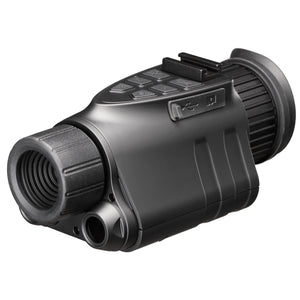
After dark, a thermal imaging camera can pick out the warm blows and surfacing bodies of whales and dolphins that no one could see by eye, as our own footage from Mull shows. If you want the story of what we found, our piece on filming whales with a thermal camera covers it.
FAQs
What whales are found in UK waters? The minke whale is the most commonly seen, with humpbacks increasingly reported and orcas seen off Scotland's west coast, plus rarer visits from fin, sei and sperm whales. Around a quarter of the world's whale, dolphin and porpoise species have been recorded in Scotland's seas.
What is the most common whale in the UK? Around Scotland's west coast, the minke whale is the most numerous whale species, with numbers peaking between April and October.
Are there humpback whales in the UK? Yes. Sightings of humpbacks around Britain and Ireland have increased markedly in recent years, and they're now seen around the Hebrides and elsewhere along the coast.
What is the UK's smallest cetacean? The harbour porpoise, which grows to around 1.8 metres. It's also the UK's most common cetacean and can be seen all year round in the Hebrides.
Is an orca a whale or a dolphin? Both, in a sense. The orca, or killer whale, is the largest member of the dolphin family, and dolphins are toothed whales.
Are whales and dolphins protected in the UK? Yes. All cetaceans in Scottish waters are European protected species, and it's an offence to deliberately or recklessly disturb or harass them, as well as to kill, injure or capture them.
When is the best time to see whales in Scotland? April to October for minke whales, and May to October for common dolphins, though common dolphins have been recorded in every month since 2014.
How close can you get to whales and dolphins? Widely accepted rules of thumb are at least 100 metres from whales and 50 metres from dolphins and porpoises, and 200 metres or more from mothers and calves.