 Trusted Service
 30 Day Return Policy
 2 Year Warranty
 Worldwide Delivery
 The Bat Conservation Trust has published its first technical guide for bat emergence surveys using night vision aids. Here's what it means for ecologists.

New BCT Guidelines for Bat Emergence Surveys Using Night Vision Aids: What Ecologists Need to Know - and How Nightfox Measures Up
Summary
The Bat Conservation Trust (BCT) has published its first edition of Bat Emergence Surveys with Night Vision Aids: A Technical Guide for Professional Ecologists (2026). This landmark guide sets out best practice for using night vision aids (NVAs) - including near-infrared (NIR) cameras and thermal imaging (TI) devices - in professional bat emergence surveys across the UK. Here, we summarise the key guidance and explain how Nightfox products are designed to meet it.
What Are the New BCT Guidelines?
The BCT guide is the first dedicated national standard for the use of NVAs in bat emergence surveys. Authored by Chris Damant of Pell Frischmann and endorsed by the Chartered Institute of Ecology and Environmental Management (CIEEM), it provides a framework covering equipment selection, lighting design, survey methodology, data management, and reporting.
Why Do Night Vision Aids Matter for Bat Surveys?
Bat emergence surveys traditionally relied on human observation at dusk. Night vision technology changes this significantly. According to the guide, NVAs offer:
- Enhanced detection in low and no-light conditions, where human vision is unreliable
- Improved accuracy through recorded, reviewable footage
- A wider field of view, enabling coverage of larger or more complex structures
- Auditability - footage can be stored, reviewed, and verified after the survey
- Better behavioural data, including commuting routes, disturbance impacts, and roost access points
The guide is particularly clear that some species - such as Natterer's bat and brown long-eared bat, which emerge late and quietly - may only be reliably detected using NVAs.
Key Requirements from the BCT Guide
1. Frame Rate: Minimum 25 FPS
The guide states that 25 frames per second (FPS) is the minimum standard for both manual review and auto-analysis of NIR footage. It also cautions that some devices artificially inflate frame rates by duplicating frames - ecologists should verify native sensor frame rates, not just advertised output rates.

2. Independent, Offset Lighting
This is one of the guide's most emphatic points. Lighting from the camera position produces flat, low-contrast images. The guide recommends:
- Positioning lights independently from the camera, at 45–90° offsets
- Using sufficient power to cover the full scene - 40W+ for larger buildings
- Avoiding reliance on integrated camera LEDs for anything beyond the closest range
- Being aware of the inverse square law: doubling the distance from a light source reduces intensity to approximately one quarter
For simple rectangular buildings, the guide recommends four lights with approximately 120° beam spread, mounted up to 4m high and set 10–15m back from the structure.
3. Know Your Equipment's Limitations
The guide stresses that ecologists must understand:
- Sensor size and its effect on image quality in low light
- How pixel count interacts with sensor size (more pixels on a small sensor can reduce sensitivity)
- That higher resolution is not always better - what matters is whether bats are visible in the footage
4. Thermal Imaging as a Complementary Tool
Thermal imaging (TI) devices require no additional lighting and can detect bat body heat against cooler backgrounds. The guide recommends a minimum native sensor resolution of 640 x 480 and a native frame rate of at least 30Hz for TI devices. It also notes that buildings in direct afternoon sun can reduce thermal contrast at dusk, making TI less effective in those conditions.
5. Data Management and Storage
NVA footage generates large data volumes. The guide requires:
- Clear file naming and storage systems
- Data retention aligned with project lifetime and UK GDPR
- All footage to be reviewed unless there is documented justification otherwise
6. Reporting Standards
Reports using NVAs must include:
- Equipment type, make, and model
- Camera position and lighting layout on survey plans
- Still images captured at the darkest point of the survey
- Confirmation that footage was reviewed and how it correlates with acoustic data
- Any limitations, equipment failures, or gaps in coverage
What the Guide Does Not Prescribe
Importantly, the BCT guide is deliberately non-prescriptive about specific brands or models. It sets out principles rather than a shopping list. This reflects the rapidly evolving nature of the technology - the guide acknowledges that equipment purchased today may be superseded quickly, but that does not mean it is ineffective.
The guide also recognises that no single piece of equipment suits every situation. Survey design - choosing the right combination of cameras, lighting, and surveyors for the specific site - is the professional skill at the heart of good bat survey practice.
Nightfox's Response: How Our Products Address the Guidelines
At Nightfox, we've been supplying ecologists with night vision equipment for bat surveys for several years, and we welcome the BCT's publication of this guide. It reflects much of what we've heard from ecologists in the field, and it aligns closely with the design decisions behind our bat survey product range.
Here's how our key products address the guide's requirements:
Frame Rate ✓
Our bat survey-focused devices - including the Nightfox Nova - feature a 60 FPS native sensor and display. This comfortably exceeds the guide's 25 FPS minimum and provides smooth motion capture for fast, unpredictable bat flight. We publish our native sensor frame rates clearly, so ecologists can verify they're getting real temporal resolution, not duplicated frames.
When recording, the Nova captures at 60 FPS in 720p resolution, or 30 FPS in 1080p. For bat emergence surveys, we recommend recording in 720p at 60 FPS - the higher frame rate is more valuable than the resolution uplift for detecting fast-moving bats, and both exceed the guide's 25 FPS minimum standard.
Independent, Offset Lighting ✓

The BCT guide's strongest lighting recommendation - use independent, offset lights rather than relying on integrated camera LEDs - is exactly what our supplementary lighting range is designed for.
The Nightfox Arc IR Floodlight is our most powerful illumination option:
- 20W output - placing it firmly in the guide's medium-to-high power category for wide-area coverage
- 140° beam angle - exceeding the guide's suggested ~120° for standard building surveys
- Tripod-mountable - enabling the offset positioning at height that the guide recommends
- Dimmable and USB-C rechargeable - with the ability to run indefinitely when plugged in, ideal for multi-hour emergence surveys
- 850nm wavelength - the guide's preferred wavelength for maximum range and camera sensitivity
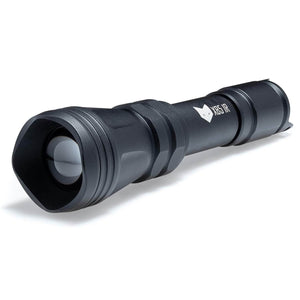
The Nightfox XB5-Pro IR Torch complements the Arc for targeted use:
- 5W output with a focusable, 120° maximum beam angle
- Stepless dimmer switch for fine-tuning brightness - a feature the guide values
- Ideal for illuminating individual roost access points or shadow areas that wider floodlighting misses
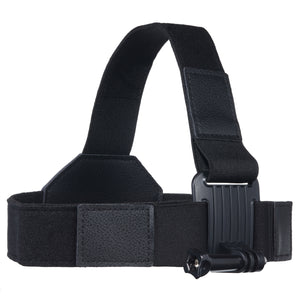
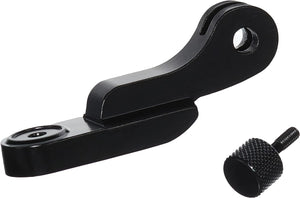
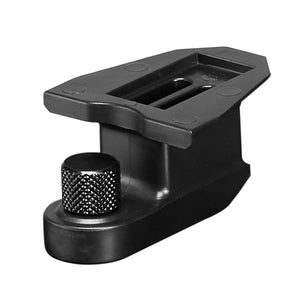
- Can be mounted independently on a tripod or camera mount for offset positioning
Critically, the integrated IR LEDs in Nightfox NVAs can be turned off entirely, allowing ecologists to use only the Arc and XB5-Pro for lighting. This means the camera and light sources are fully decoupled - exactly as the guide recommends for best contrast and image depth.
Knowing Your Kit's Limits
We believe ecologists deserve honest information about equipment, and the BCT guide is right to emphasise this. Here is where Nightfox devices sit within the guide's framework:
-
Sensor size: Nightfox devices use compact CMOS sensors rather than the large full-frame sensors found in converted DSLRs. It's worth noting that these aren't generic compact sensors - the Nova uses a STARVIS sensor, specifically engineered for low-light performance, and both the Nova and Whisker are routinely used by ecologists to cover full rooflines rather than single entry points. Larger sensors do offer advantages in the most demanding conditions, but they also come at a significantly higher price point. For most standard emergence surveys, a Nightfox NVA with well-positioned independent lighting will deliver footage that meets the guide's core requirement: bats are clearly visible.
-
Complex or large buildings: For major structures, multiple units and/or higher-specification cameras may be needed. The Arc's 20W output, while substantial for a portable battery-powered unit, is below the 40W+ the guide recommends for larger buildings. Using multiple Arc units addresses this.
-
Not a standalone solution: The guide is clear that NVAs must be used alongside acoustic detectors. Nightfox devices record video; they should always be paired with an appropriate bat detector for species identification and acoustic correlation.
What This Means in Practice
For many common survey scenarios - monitoring roost access points on domestic or smaller commercial buildings, targeted observation of suspected emergence features, or supplementing a wider survey carried out by a more experienced team - a Nightfox NVA with Arc floodlighting and XB5-Pro torches positioned independently represents a setup that aligns well with the BCT guide's principles.
For larger, more complex structures, Nightfox equipment works best as part of a broader toolkit alongside higher-specification cameras and more powerful independent lighting arrays.
A Note on the Thermal Master DV2

We also supply the Thermal Master DV2, and it's worth clarifying where it sits in relation to the BCT guide. The guide recommends a minimum native sensor resolution of 640 x 480 and a native frame rate of at least 30Hz for thermal devices used in professional emergence surveys - and the DV2 doesn't meet those thresholds.
That doesn't make it a poor piece of kit. For single-entry point monitoring, informal surveys, or projects where the BCT guide doesn't need to be formally cited, the DV2 remains a capable and affordable thermal option that many ecologists find genuinely useful, even impressive, in the field.
For surveys where full compliance with the guide is required, we'd recommend pairing NIR cameras with independent lighting as your primary setup - which is where the Nova, Arc, and XB5-Pro come into their own.
We're also aware that the thermal market is moving quickly, and so are we. We're currently developing a new thermal device built to meet the BCT guide's specification. It won't be ready for the 2026 survey season, but we'll be sharing more details ahead of 2027.
Frequently Asked Questions
Can I use the Nightfox Nova for bat emergence surveys?
Yes. The Nova features a STARVIS low-light sensor and records at 60 FPS in 720p, exceeding the BCT guide's 25 FPS minimum. It's well-suited to roost access point monitoring and roofline coverage on domestic and smaller commercial buildings, paired with independent lighting and an acoustic bat detector.
What does the BCT guide say about integrated camera LEDs?
The BCT guide advises against relying on integrated camera LEDs beyond the closest range, recommending instead that lights are positioned independently at 45–90° offsets from the camera. Nightfox NVAs allow integrated IR to be switched off entirely, so the Arc and XB5-Pro can act as the sole light sources - fully decoupled from the camera, as the guide recommends.
What is the difference between NIR and thermal imaging for bat surveys?
NIR cameras use reflected infrared light to produce detailed footage of roost features and bat behaviour. Thermal imaging detects body heat and needs no additional lighting, but offers less image detail and can be less effective on sun-warmed buildings. The BCT guide recommends the two as complementary tools rather than alternatives.
What wavelength does the Nightfox Arc use? 850nm - the guide's recommended wavelength for maximum range and camera sensitivity with digital NIR devices.
Is Nightfox equipment suitable for all bat emergence surveys? Nightfox equipment is well-suited to targeted roost-access point monitoring and surveys of small to medium-sized structures. For large or complex buildings, it works best as part of a wider equipment setup.
Does the guide name Nightfox as approved equipment? The BCT guide deliberately does not name specific brands or models, as technology is evolving rapidly. It sets out principles for equipment selection, which ecologists apply using professional judgement.